RNIB Connect / RNIB Design For Every Gamer Launch (audioboom.com) – Sitting on news like this and not being able to talk about it is an odd form of torture, but Design for Every Gamer is finally here. Follow the link above to hear an interview about the project on RNIB Connect Radio.
The first publicly-facing part of this will be several Twitch streams starting on Monday 9th with Sightless Kombat at 7 PM. You can find his Twitch channel here, and visit the RNIB DfEG webpage here.
Accessibility Tags roll out this week on PlayStation Store on the PS5 console – PlayStation.Blog – In any other week this would have been the lead news story, because this is a big step forward for PlayStation and an extremely helpful feature for PlayStation users. Coming this week, PS5 game developers can add accessibility tags to their games. This should make it easier to find games with specific accessibility features, and avoid buying games that are difficult or impossible to play.
I first started reading comics around 1994/1995 after finding a UK-published reprint of X-Men volume 2 issue 1 at my local newsagents. It was the height of the massive growth in comics sales, and X-Men were the biggest part of it.
I bought X-Men for a few years, and as my newsagent would change what they stocked I’d change too. I ended up reading a bunch of Spider-Man, Wolverine and Gambit solo series alongside more occasional X-Men. Eventually though I stopped. There were several reasons why this happened but by far the most difficult to overcome was my sight loss. It had deteriorated considerably in my early teens and has continued slowly deteriorating ever since. Losing much of the central part of my vision was difficult, and it was easy to justify dropping comics when they’d become so hard to read.
Enter Digital Comics
In 2011 my partner suggested I tried digital comics on Marvel Unlimited. She had a trial code that I could use, and knowing I’d loved comics in the past she thought I should give it a try.
I quickly became a subscriber. It was the gateway back into comics I needed. The service in 2011 was still a bit basic; the web-based interface was built in Flash with a lens magnifier for those who needed a bit of enlargement, but it was a far cry from the modern Unlimited app with its highly adjustable zoom. The library too was spotty at best, but there were enough full series to keep my interest.
Accessibility Issues
Unlimited and other digital comics services allowed me to return to comics, and this is not something I’d be happy losing again. I’m acutely aware that my current sight could deteriorate further to the extent where I’ll again be unable to read comics and find myself cut off from the stories I’ve enjoyed for over a decade.
Though digital comics services have gone a long way to making the medium more accessible to people with low vision, none allow people with little or no sight to enjoy the comics or have an experience equitable to sighted readers. As someone who already has significant sight loss that may deteriorate further, this is a big problem for me.
So what can be done about this?
Getting Creative with Alt-Text
I initially started thinking about this while skimming through the Marvel Twitter account. Any media included on posts tended to be videos, but when it was an image it usually lacked any alt-text. Alt-text is additional text that accompanies an image, providing context for people who use screen readers. If you can’t see the image, then the alt-text should describe what it is. Without it a screen reader will usually reply “image”, or it might hazard a guess if it’s a bit fancy.
It’s odd to see a major media company fail to add alt-text to their images online, at least in my experience. It started me thinking about the nature of comics as a sequence of images, and whether alt-text could be used to give blind readers access to comics.
So I decided to do a test.
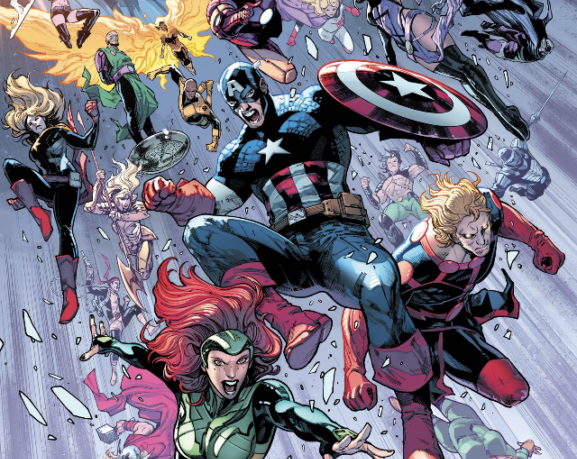
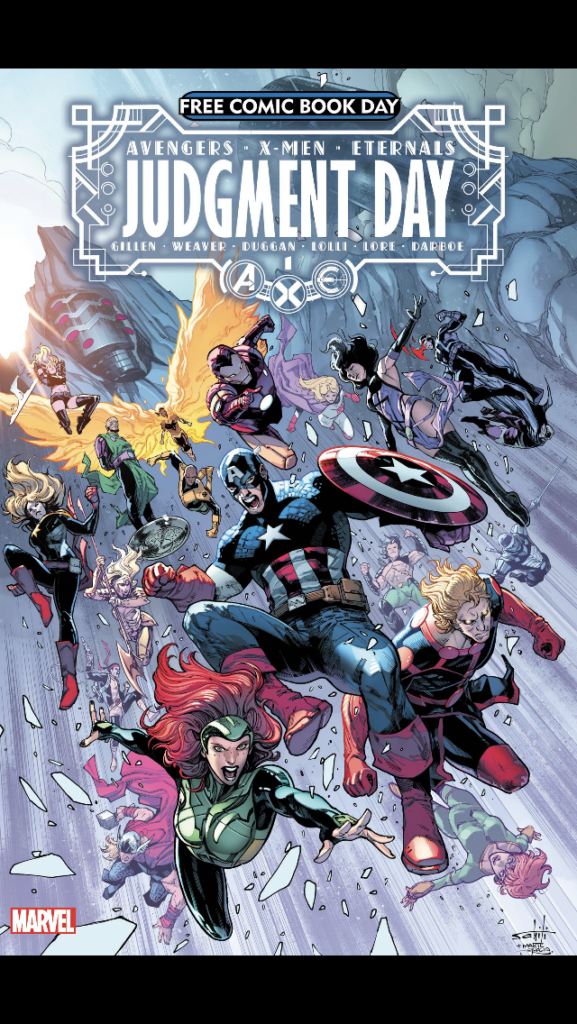
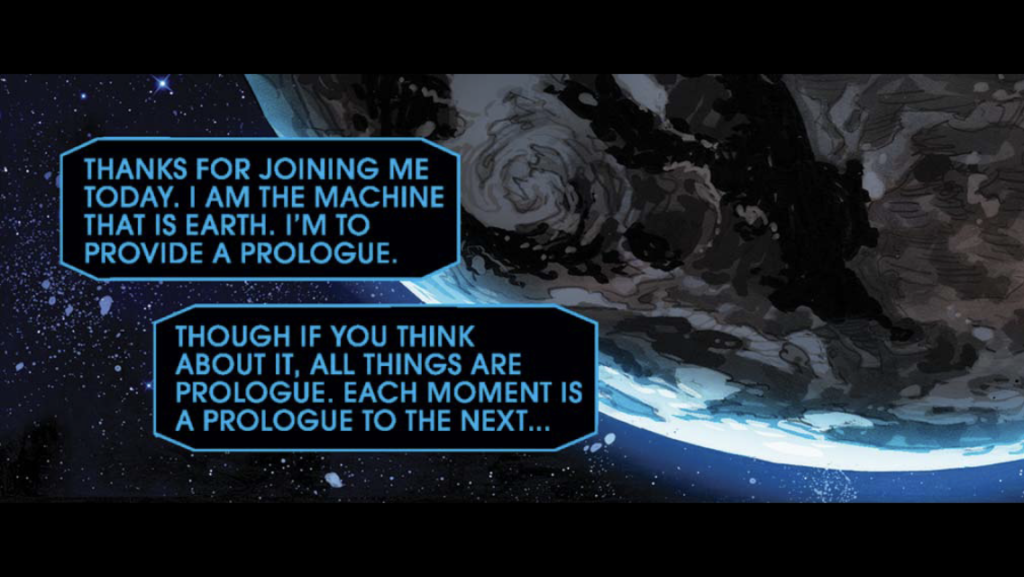
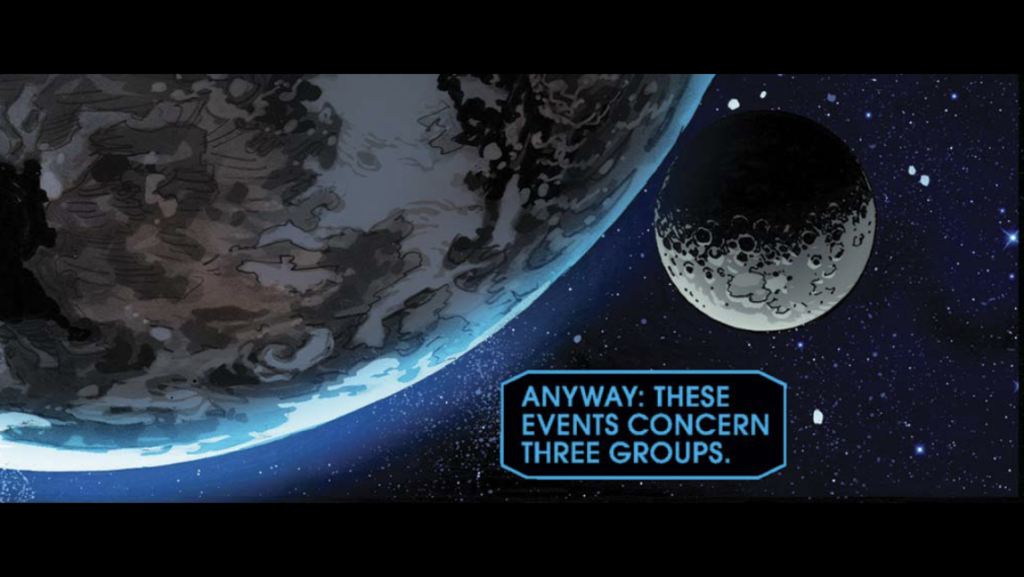
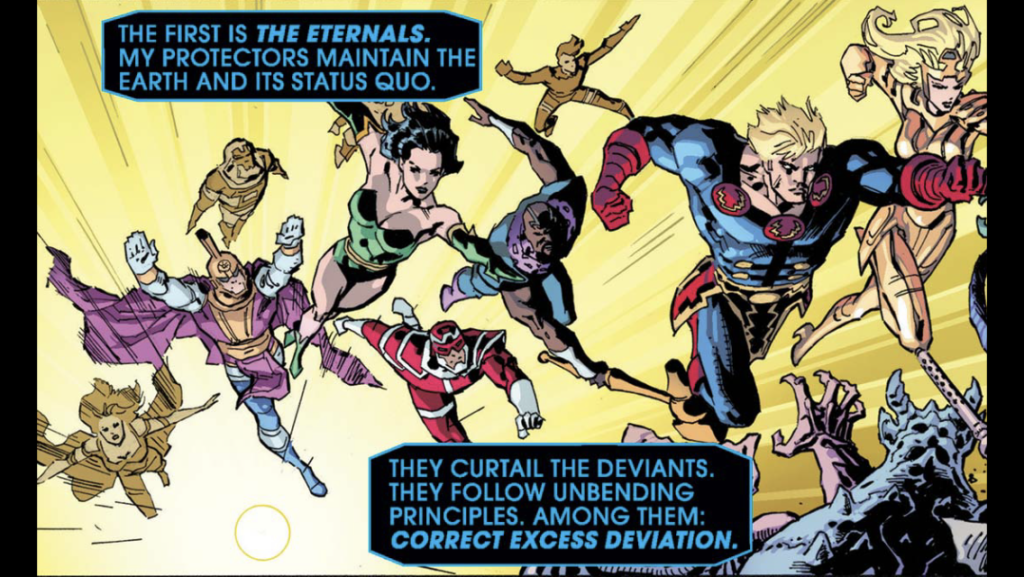
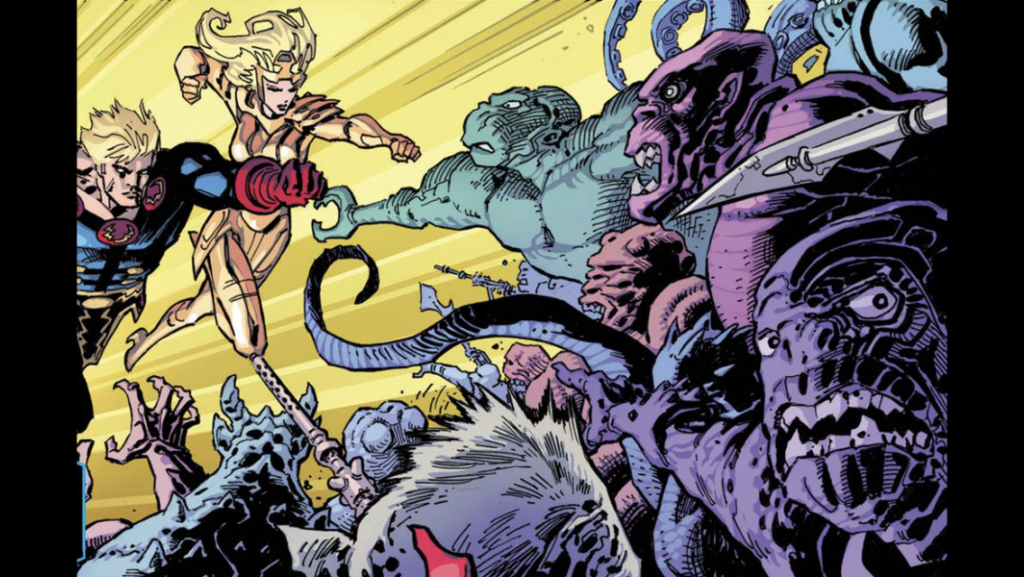
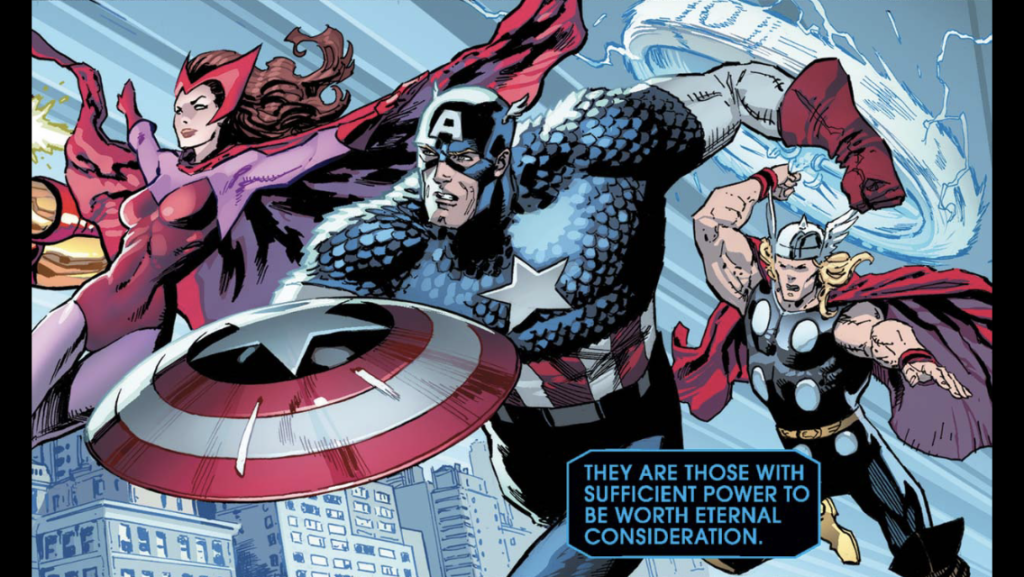
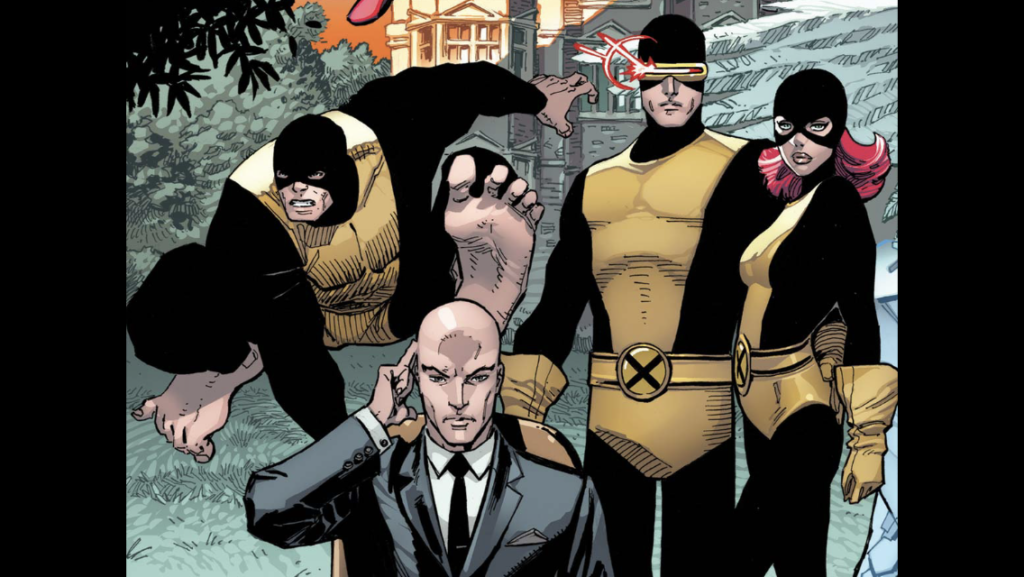
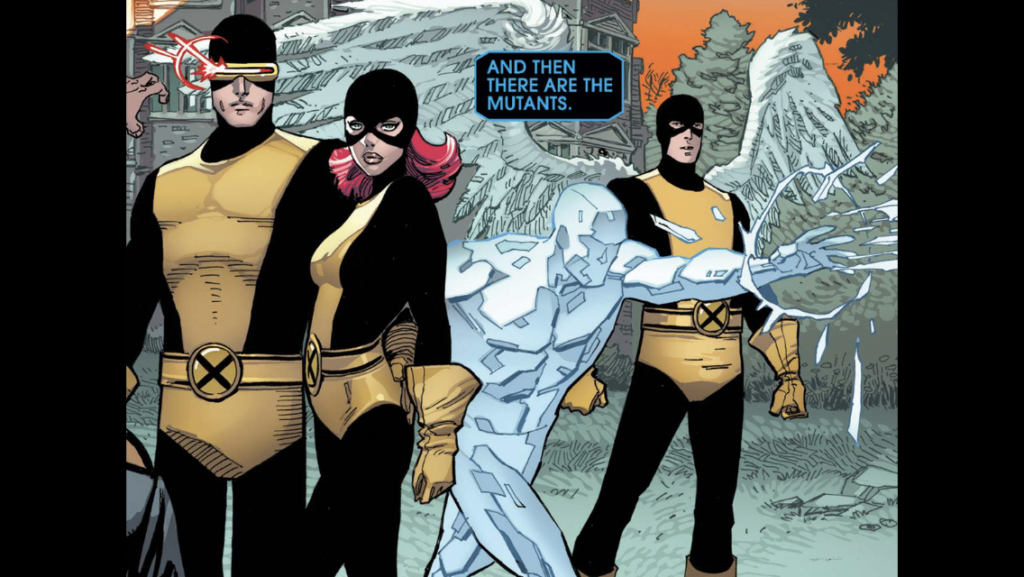
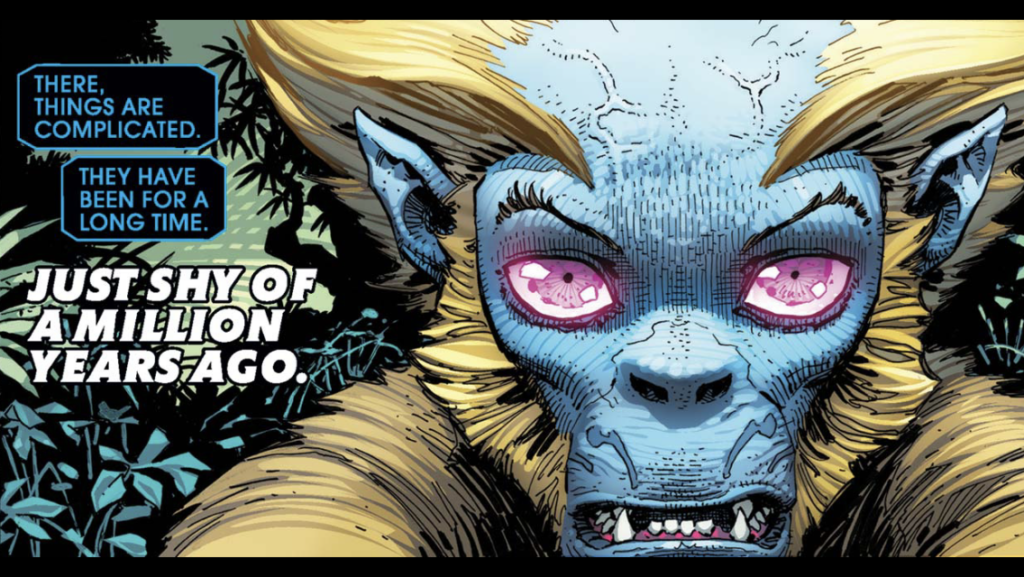
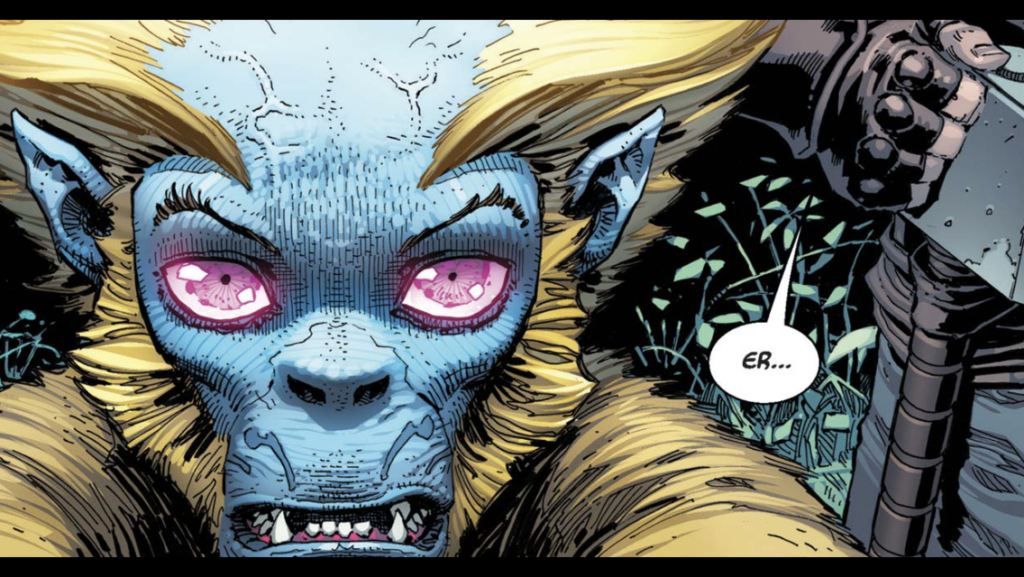
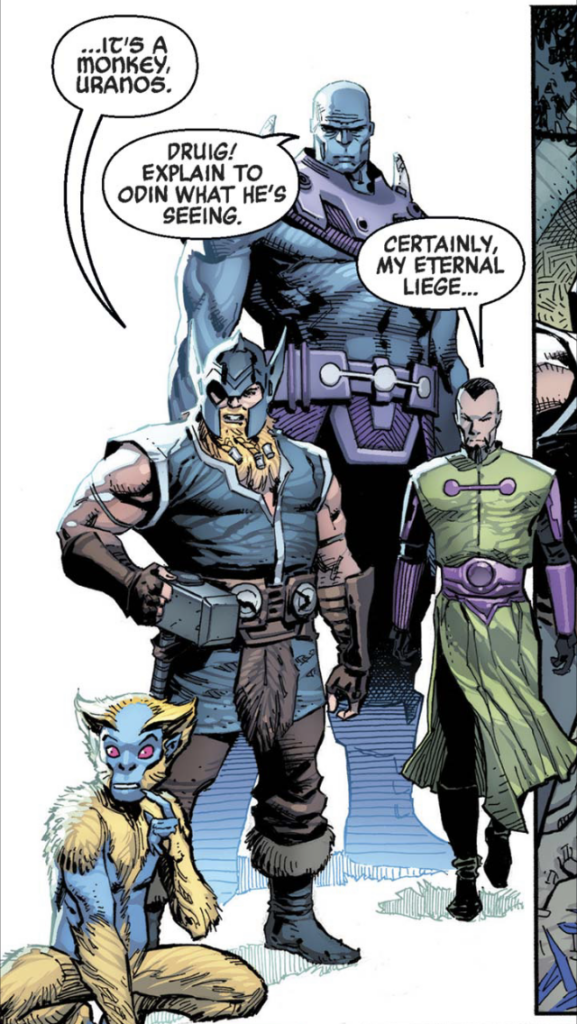
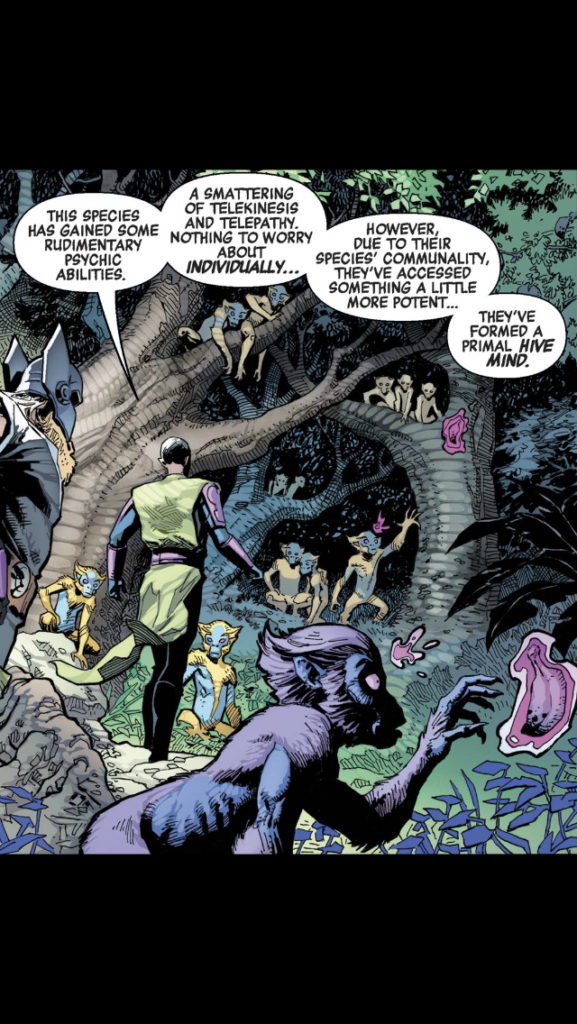
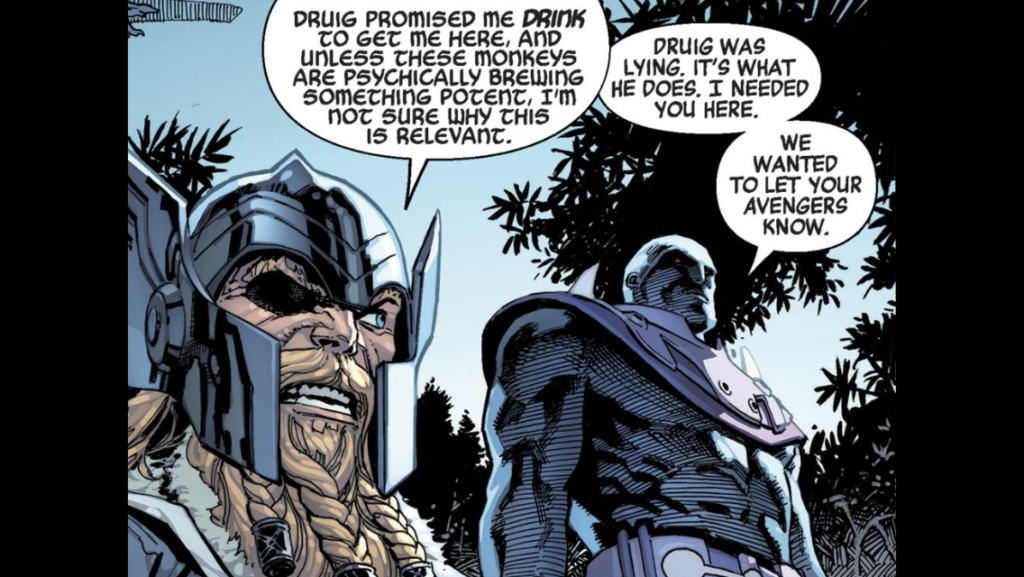
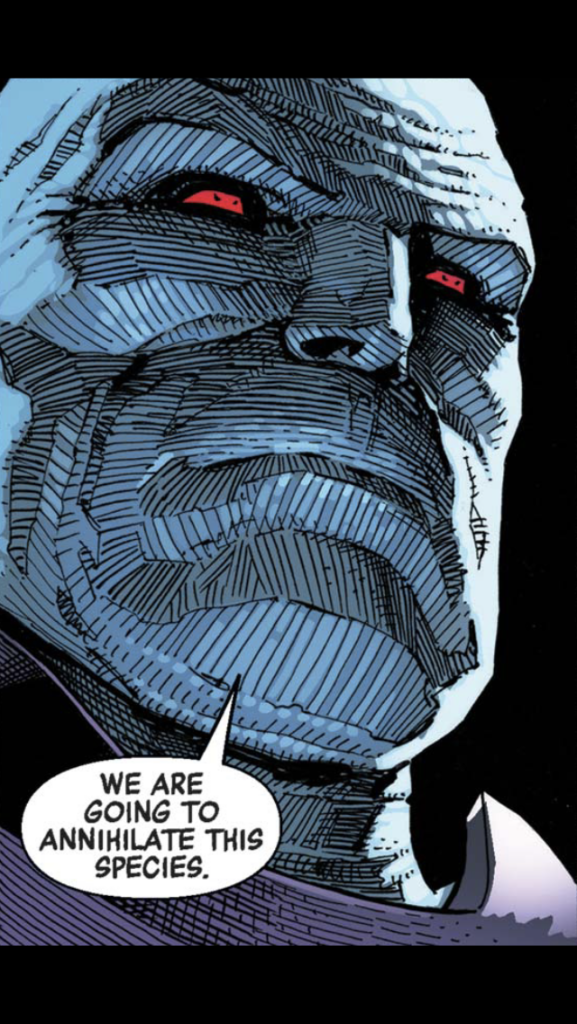
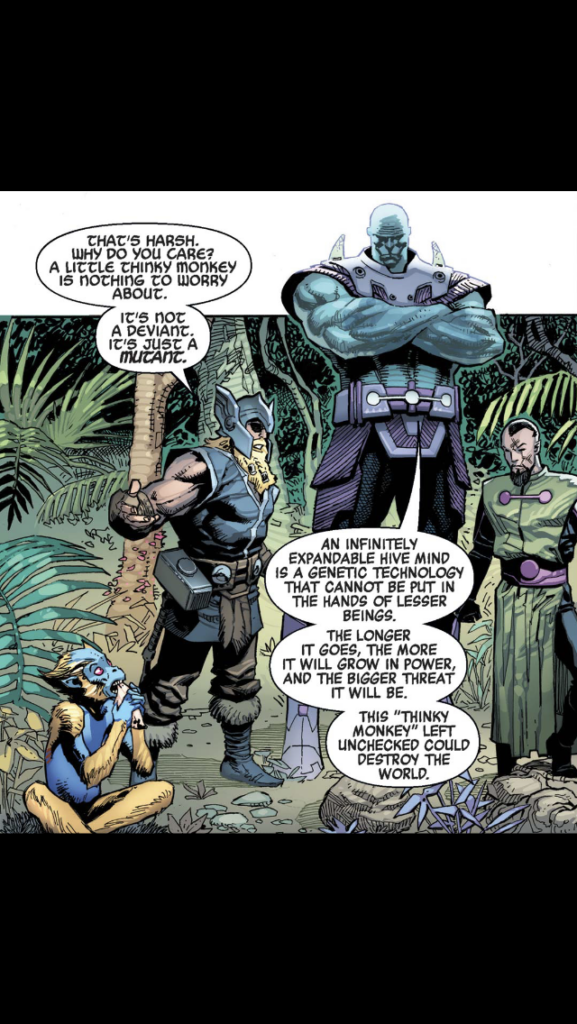
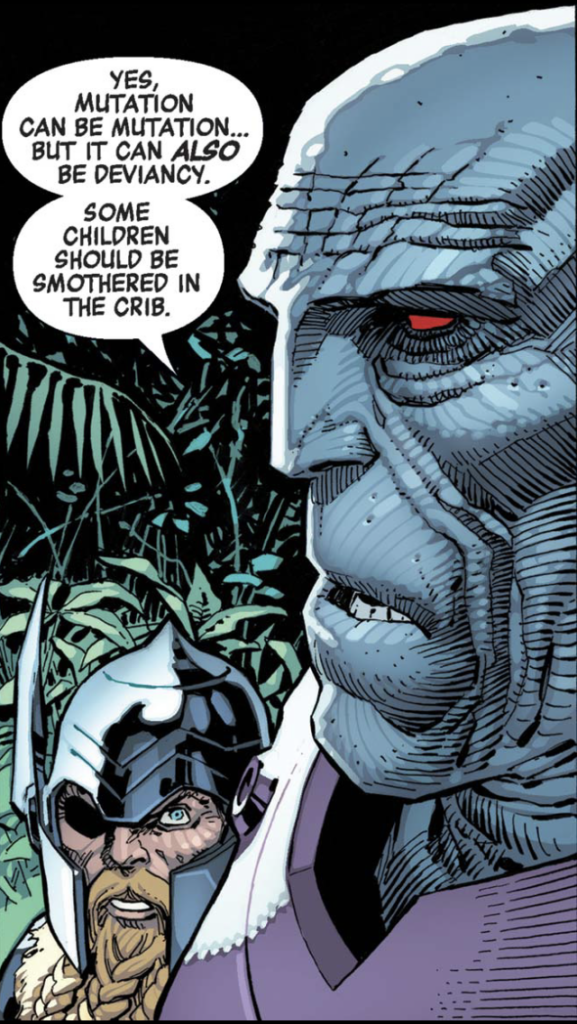
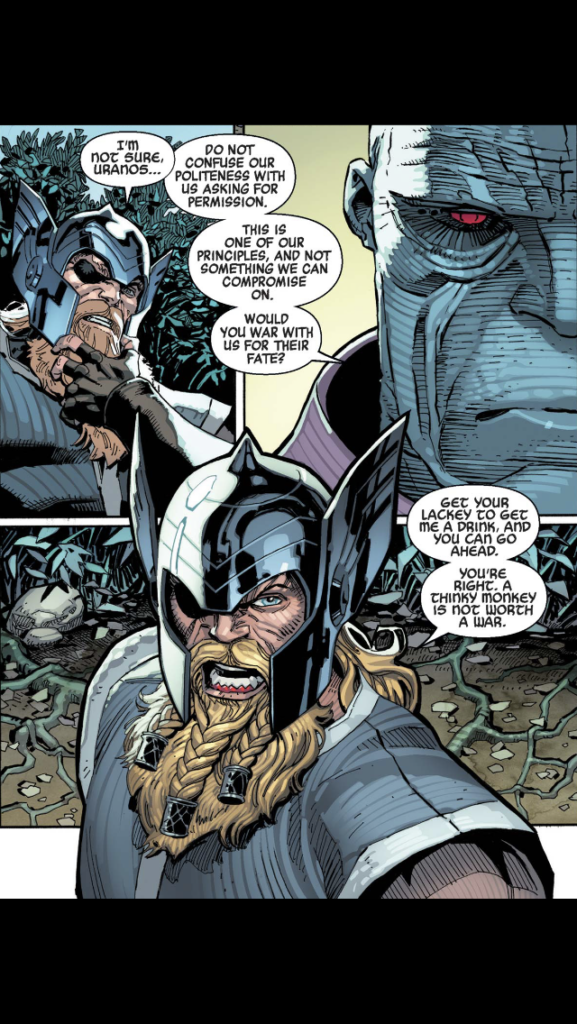
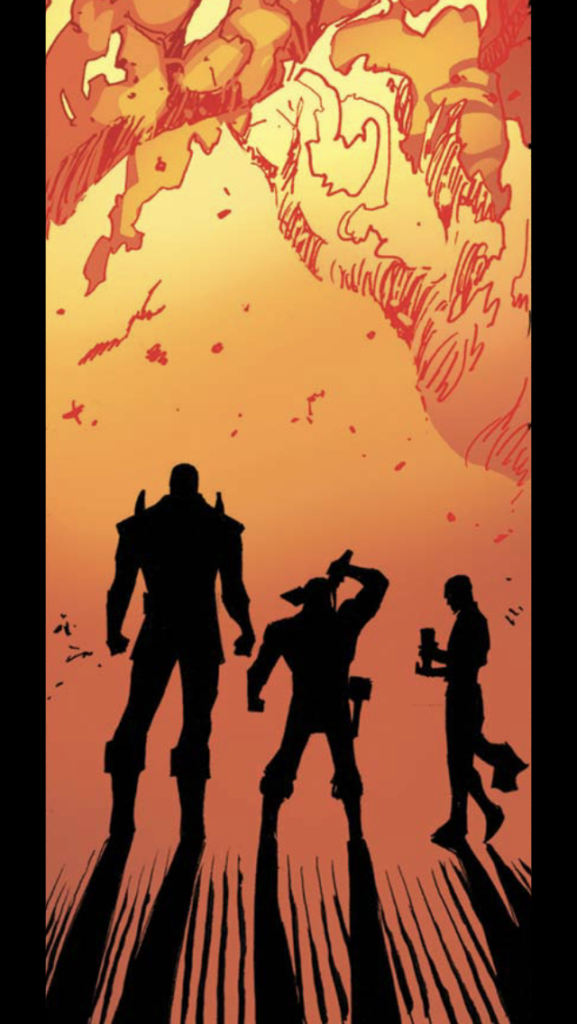
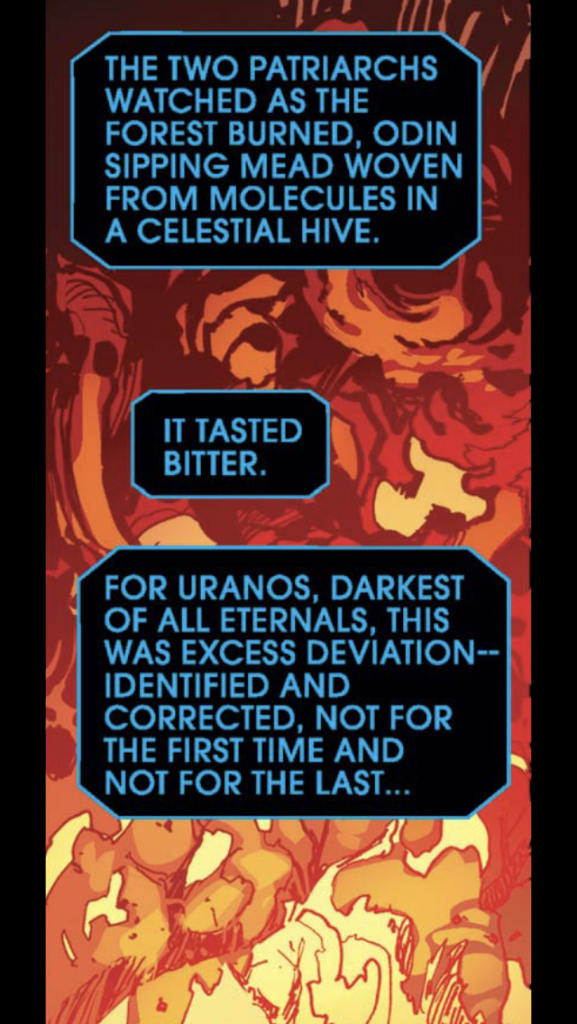
Later in this post are a series of panels from Free Comic Book Day: Avengers/X-Men #1. I’ve chosen this issue as it’s a recent issue, so will be a good example of current Marvel comics. It’s also free, which I’m hoping will prevent any copyright issues. I’m sure fair use applies here, but it’s worthwhile to minimise the risk of angry correspondence from copyright owners. Even then, I’m using the first three pages that are shown in previews of the comic on the various digital comic shops.
(Small digression: I appreciate that it would have been better from a writer’s perspective to finish this post with the comic I’d mentioned in the first paragraph, X-Men volume 2 issue 1. I love that issue, but the one below is a better fit for the purposes of this test. X-Men Vol. 2 issue 1 is brilliant though, and if you can read it you absolutely should!))
Each image is a screen-capture from the guided view of the issue when read through the Marvel Unlimited app on iPhone. It’s the intended order and framing of each part of the story as set by the publisher. I’ve added alt-text to these images so that people reading via screen reader have a description of the panel. That way – hopefully – those users can follow the story as a sighted reader would.
Finally, bare in mind that I’m not a writer of any real skill. While I can form a decent enough email for work, the writers among you will probably find it all a bit clunky. Keep in mind it’s only a test to see if the concept works.
Screen Reader Support
For those of you viewing this page who are not using a screen reader, here’s what you need to do to enable it:
Please note: You’ll need to enable your operating system’s screen reader to hear the image’s alt-text. Here’s how to do this on Windows, Mac, iPhone/iPad, and Android. These are all free and come as standard with each of the mentioned OS’, so there’s no need to install any additional software.
Free Comic Book Day: Avengers/X-Men #1. Written by Kieron Gillen, Gerry Duggan & Danny Lore. Art by Dustin Weaver, Matteo Lolli & Karen Darboe. Cover by Valerio Schiti.
If something like this were to be implemented on a digital comics platform it would need a skilled writer to express the image contents in a way that was both informative and entertaining. Comics aren’t necessarily a medium intended to be expressed in this way. The writer of the alt-text would need to have great knowledge of the story, the characters, and their histories. I expect it would take a team of people to transpose the comics to images with alt-text each week, or only a handful of the most popular titles would receive this treatment.
So what do you think? Does it work? I was very rigid in announcing the different panels and their pages, something that could be omitted for those who want a more streamlined version. It may also be better if the alt-text was less concerned with including everything on the page, and was more focused on providing the story in an entertaining way.
Is this something that could be used to allow blind people to enjoy comics?
In Dundee on October 5-6, RNIB partnered with Abertay University to hold the Accessible Gaming Symposium. The two-day event saw game developers from across the works attend in person and online to discuss how games can be made more accessible to blind and partially sighted players. During the event Connect Radio recorded several interviews with attendees:
The Royal National Institute’s VI Gaming groups have their own separate Community Discord server, and will be holding a community fundraising event to coincide with Global Accessibility Awareness Day and RNIB’s #GamingForRNIB fundraising event.
They are streaming from Global Accessibility Awareness Day on the 20th – 23rd of May. It will be streaming live, and people can watch and get involved. Anyone can support the event by donating to the fundraiser or just join the livestream and find out more about accessible gaming for blind and partially sighted people.
Follow and Donate You can follow the fundraising event on Twitter #GamingForRNIB. Support the group by donating. You can donate safely and securely at JustGiving.com: https://www.justgiving.com/fundraising/vigaminggroup
On May 15th The University of Abertay in Dundee are launching the Abertay Digital Graduate Show 2020, an online showcase of the creative works of its students. Abertay is known worldwide as a centre of excellence in the field of videogame development, and there will no doubt be games on display. Of those games one stands apart as relevant to a blind or visually impaired gamer, and that game is FHear by Alasdair Marnoch.
Alasdair is a visually impaired student of the University of Abertay’s Sound and Music for Games undergraduate degree course, and is aiming for a career as the audio designer for a game development studio. This was a natural fit for him, given his musical background and interest in games:
“I grew up playing the violin and piano so I guess you could say that music has always been a passion of mine. I’ve always enjoyed playing computer games and have loved learning about how sound and music are used within the computer games industry whilst at university.”
His graduate show game, FHear, is a horror-themed audiogame, a videogame that is playable through audio alone. There is no need for sight to be able to play and enjoy the game and experience everything it has to offer. It is influenced by the popular adventure audiogame “A Blind Legend” and the “Dead Space” and “Slenderman” horror series’ of videogames. In FHear the player finds themselves stranded in a dark forest and must use their hearing to identify the direction of a guide and escape the pursuit of a malevolent creature. The sense of fear and foreboding is heightened by the music, which grows more intense as the creature gets nearer.
Early in the project Alasdair did not initially seek to make a game that was playable by blind people. However, during development he realised that he was creating something that was accessible to players without sight. He intended to introduce his project tohis local VI organisation, Dundee Blind & Partially Sighted Society, but due to the Covid-19 outbreak restrictions this was not possible. Thankfully, with the graduate show being held entirely online everyone can experience FHear.
Videogame consoles are, for most people, the easiest and most straightforward way to play videogames. Each is a device purpose-built to play games – the most well known brands being Xbox, PlayStation and Nintendo – and each has its own set of exclusive games unavailable to owners of competing consoles. For most these exclusive games are the main factor in choosing which console to buy, but for blind and visually impaired players there is another concern – accessibility.
All of the currently available consoles have their own set of accessibility features that blind and visually impaired users may find useful. Each has a magnifier and their own selection of options to make the screen easier to read, including inverted colours, high contrast modes, and larger text sizes. In addition to this, Xbox consoles have a built-in screen reader. While this may sound very helpful, in practice this is limited to the core system interface and a small number of apps and games. Thankfully a growing number of game developers are adding their own narration and text to speech solutions.
Of course, accessibility options on consoles are only useful if there are games they can help you play. Most mainstream games are not designed to be playable without sight, though this does not mean that it cannot be done. What games then are accessible to a blind videogame console owner?
One way to find games to play would be to try them yourself. Each of the consoles has it’s own dedicated online store where demo versions of many games can be downloaded to experiment with. In addition, Xbox has recently introduced a Netflix-style subscription service allowing access to a large library of games for a monthly fee, eliminating the risk of buying a full price game only to find it isn’t playable by blind people.
Another option is to seek out people or organisations that can offer guidance on the most accessible games. Local organisations such as Triple Tap Tech can advise on the best gaming hardware and games to play, and connect people to groups of fellow visually impaired gamers. Blind and visually impaired gaming personalities on video-streaming websites like YouTube and Twitch are another great source of information. Blind gamers like Steve Saylor, James Rath and Brandon Cole give video demonstrations of their gameplay on consoles, narrating the action while discussing the accessibility barriers they may face and how they overcome them. As these videogame streamers normally gravitate towards the most popular recent releases it’s a great way to learn about the accessibility features of any new hit game.
Though the current crop of consoles are more accessible to blind players than any that came before, there is still a long way to go. Thankfully the manufacturers of these consoles are making accessibility and inclusion for all players a key selling point of their upcoming systems. Both Xbox and PlayStation are planning to release new console models within the next year, and as these will almost certainly be more accessible to blind people than previous models.
The games are more likely to be playable by blind people too. Game development tools are including features like text to speech as a standard part of their software, allowing more games to have this option. Accessibility options in general are becoming a standard feature in games, with many game studios hiring accessibility specialists and consulting with people with a wide range of disabilities to ensure their game is playable by as wide an audience as possible.
Videogame consoles are not the easiest or most accessible way for people with visual impairments to play videogames. Smartphones, tablets and home computers have a wider array of accessible games and more advanced accessibility features than any of the videogame consoles. Consoles are, however, often cheaper and where the vast majority of popular, mainstream games can be played. Depending on your level of vision you may be surprised by how many games are playable, and with so many blind gamers with a wise range of eye conditions sharing their experiences online it’s not difficult to find out what these are. If you can get access to one to try they are definitely worth checking out.